

Get the ratio right
Before you configure your first stablecoin payout, you need to decide how your team will handle the split between on-chain assets and local currency. This decision dictates your tax reporting, your cash flow, and your compliance burden. The crypto payroll market reached $1.48 billion in 2024, and with 25% of businesses already using cryptocurrency for payroll, the infrastructure is mature—but the regulatory stakes are high.
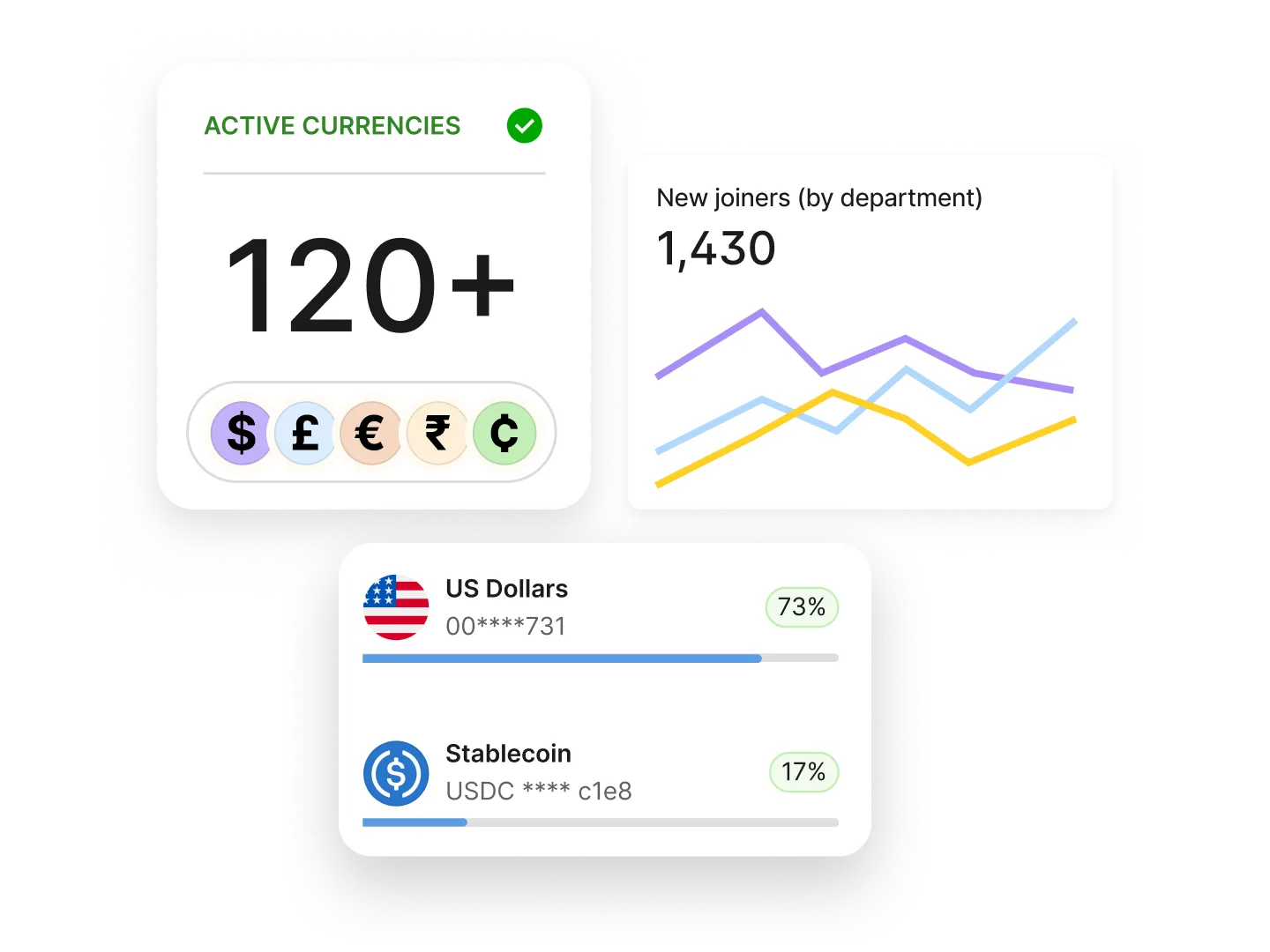
You generally have two paths. The first is full stablecoin retention, where employees receive USDC or USDT directly into their wallets. This offers speed and low fees but exposes workers to crypto volatility and requires them to manage their own tax liabilities. The second is fiat conversion, where the payroll platform automatically swaps the stablecoin into local currency before depositing it into the employee’s bank account. This removes volatility risk for the worker but often incurs higher transaction fees and may trigger additional reporting requirements in your jurisdiction.
Most global teams choose a hybrid approach. You might pay core contractors in stablecoins for speed, while converting payments for employees in strict regulatory zones like the EU or UK to ensure compliance with local labor laws. Check your local tax authority’s stance on crypto assets before finalizing your ratio. A mismatch here can turn a simple payroll run into a compliance audit.
Mix it in the right order
Seamless crypto payroll requires a strict sequence to ensure compliance and accurate fund distribution. The process moves from legal structuring to technical execution, ending with tax reconciliation. Following this order prevents failed transactions and regulatory penalties.
Select a jurisdiction that recognizes stablecoin payments as valid salary. Verify local labor laws allow compensation in digital assets. If your company is US-based, ensure contractors are classified correctly to avoid misclassification fines. This step sets the legal foundation for all subsequent payments.

Integrate a specialized crypto payroll provider like Bitwage or Eco. These platforms handle the complex conversion of stablecoins into fiat currency for tax purposes. Configure smart contracts to automate payment triggers based on work completion. Ensure the platform supports the specific stablecoins your team prefers, such as USDC or USDT.
Collect KYC (Know Your Customer) documentation from every contractor. Verify bank account details for fiat off-ramping if the platform supports automatic conversion. Set up wallet addresses for direct crypto transfers. Double-check all wallet addresses to prevent irreversible loss of funds due to typos.
Define payment frequencies (weekly, bi-weekly, or monthly). Set daily or monthly transaction limits to manage cash flow and mitigate risk. Enable multi-signature wallets for large payouts to require additional approval. This step ensures consistency and security in the payroll routine.

Generate monthly reports from the payroll platform. Match crypto payments to tax obligations in each contractor’s jurisdiction. Use the platform’s export features to simplify accounting. Ensure all transactions are recorded as income for the contractor and expenses for the company.
Fix bitter or weak flavor
Even with the best crypto payroll platforms, human error can turn a smooth transaction into a compliance nightmare. The "bitter" outcomes in 2026 usually stem from three specific failures: misconfigured smart contracts, ignored local tax thresholds, and poor stablecoin selection.
Smart Contract Misconfiguration
Automated payroll relies on code. If your smart contract parameters are not aligned with your HR data, payments will fail or go to the wrong addresses. This is not a "user error" in the traditional sense; it is a structural flaw. Always run a test transaction on a testnet before deploying to mainnet. Verify that the gas limits and recipient addresses match your payroll provider’s documentation exactly.
Ignored Local Tax Thresholds
Crypto is not tax-free globally. In 2026, 25% of businesses use cryptocurrency for payroll, but many still treat it as a simple exchange. This is a mistake. Each contractor’s location dictates withholding requirements. If you pay a contractor in Germany, you may need to handle VAT or income tax withholding just as you would for a fiat salary. Failing to integrate local tax rules into your payroll flow can result in heavy fines and legal action.
Poor Stablecoin Selection
Not all stablecoins are created equal. Some are pegged to assets that are volatile or lack transparency. Using a less-regulated stablecoin can expose your company to de-pegging risks. Stick to major, audited stablecoins like USDC or USDT for payroll. This ensures that your employees receive the value they expect, and your accounting remains straightforward. Check your payroll provider’s supported assets list before onboarding new contractors.
Crypto payroll 2026: what to check next
Stablecoins have moved crypto payroll from experimental to standard practice. Platforms like Bitwage and Deel now support stablecoin payouts across 170 countries, driven by the need to solve volatility. As adoption grows from 25% to projected 40% by late 2026, understanding the mechanics and compliance requirements is essential for global teams.
No comments yet. Be the first to share your thoughts!