
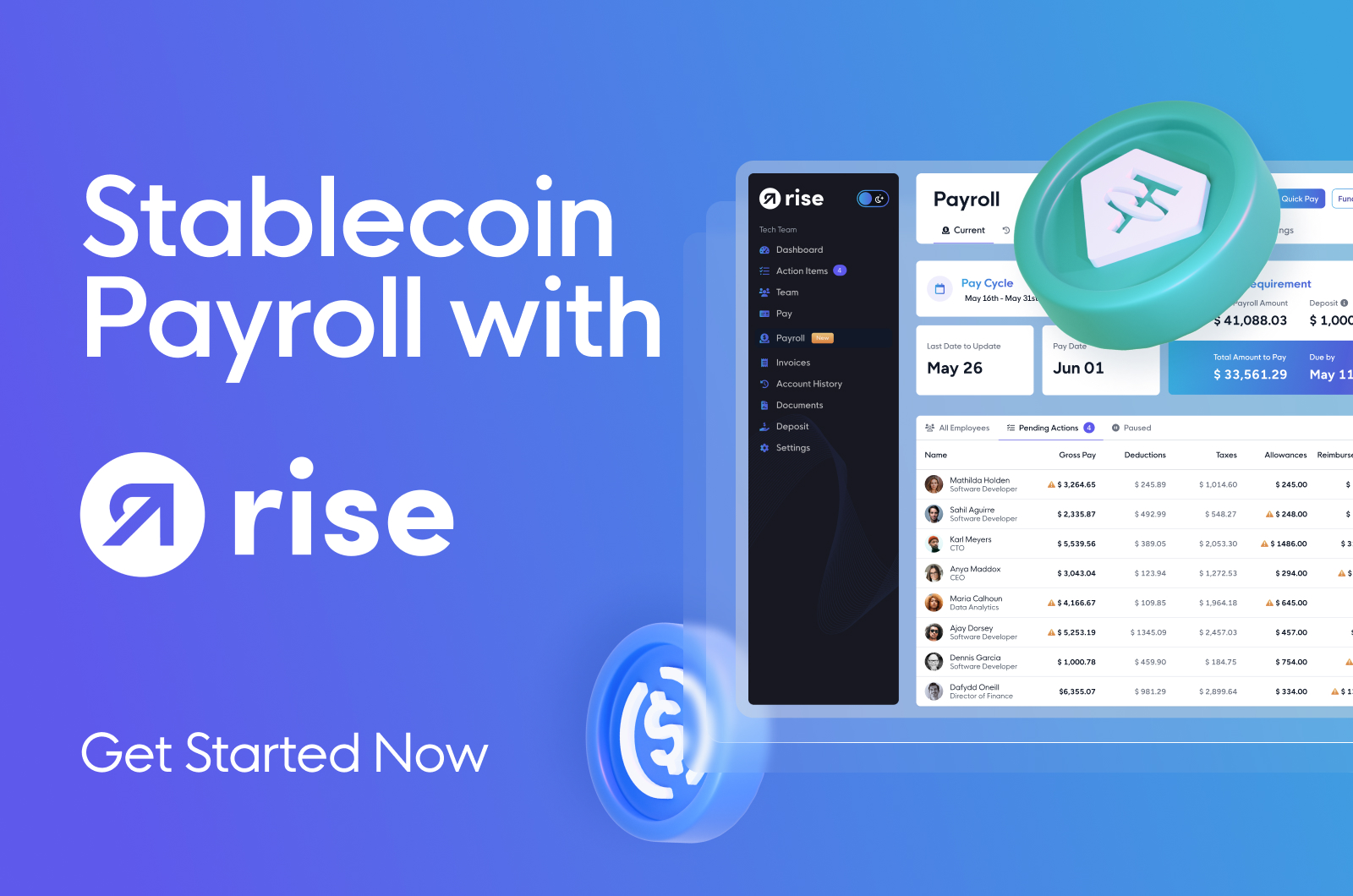
The stablecoin payroll shift in 2026
Stablecoin payroll has moved from a niche experiment to a mainstream enterprise function, driven by the convergence of supply growth and clearer regulatory frameworks. In 2026, the market has solidified around the $315 billion total stablecoin supply, a figure that underscores the liquidity now available for cross-border compensation (Rise Stablecoin Payroll Report 2026). This scale transforms stablecoins from speculative assets into reliable settlement rails for global teams.
The trajectory is clear: 2025 saw an estimated $390 billion to $400 billion in stablecoin payments, setting a high baseline for 2026 adoption. For employers, this shift is not merely about technological novelty; it is about efficiency. Traditional cross-border payroll often involves multi-day delays and significant FX friction. Stablecoin payroll eliminates these bottlenecks, offering near-instant settlement regardless of the employee’s location.
However, this efficiency comes with compliance responsibilities. The IRS has maintained that crypto assets, including stablecoins, are treated as property for federal tax purposes. Employers must manage the $2,000 threshold for certain reporting requirements and ensure accurate record-keeping for both the employer and the employee. The market is no longer asking if to adopt stablecoin payroll, but how to do so within the bounds of current tax law.
Comparing top stablecoin payroll platforms
Selecting a stablecoin payroll platform requires aligning technical infrastructure with legal liability. The market has consolidated around four primary providers—Deel, Rise, Eco, and Bitwage—each offering distinct custody models and compliance scopes. Because stablecoin transactions are immutable, the platform’s role in tax reporting and regulatory adherence becomes the primary risk mitigation layer.
The table below compares the core operational differences between these platforms. Note that feature sets evolve rapidly; verify current capabilities against official documentation before deployment.
| Platform | Custody Model | Supported Stablecoins | Tax Filing Automation | Global Coverage |
|---|---|---|---|---|
| Deel | Third-party custodian (MoonPay/Iron) | USDC, USDT | Automated W-2/1099 generation | 150+ countries |
| Rise | Self-custody (user-controlled keys) | USDC, DAI | Manual export, limited automation | 180+ countries |
| Eco | Institutional custodian | USDC, USDT, DAI, BRL | Automated reporting | 120+ countries |
| Bitwage | Partner custodian | USDC, BTC, ETH | Payroll integration, manual tax | 140+ countries |
Custody and Liability
Custody architecture dictates who holds legal responsibility for funds during the payroll cycle. Deel and Eco utilize institutional custodians, which simplifies compliance but introduces counterparty risk. Rise emphasizes self-custody, allowing employers to retain full control of private keys; this reduces third-party dependency but shifts the security burden to the employer. Bitwage operates as a middleware layer, converting fiat to crypto or vice versa through partner custodians, which can complicate audit trails if not properly documented.
Tax Automation Scope
Automated tax filing is the most significant differentiator for US-based employers. Deel’s integration with MoonPay’s infrastructure enables automated generation of IRS Form 1099-NEC and W-2s, directly addressing the $600 reporting threshold for independent contractors. Eco offers similar automated reporting for supported jurisdictions. Rise and Bitwage provide data exports but require manual intervention for tax form generation, increasing the risk of compliance errors during peak filing seasons.
Stablecoin Support and Cross-Chain Compatibility
Platform support for specific stablecoins and blockchain networks affects transaction costs and speed. USDC on the Ethereum mainnet remains the industry standard for large-scale payroll due to its regulatory clarity, though gas fees can be prohibitive for small payments. Eco and Rise support Layer 2 solutions and alternative chains like Solana or Polygon to reduce costs. Bitwage supports Bitcoin and Ethereum alongside stablecoins, offering flexibility for employers who wish to pay in native assets rather than dollar-pegged tokens. Verify chain compatibility with your accounting software before selecting a provider.
Navigating IRS rules and tax compliance
The regulatory landscape for stablecoin payroll is shifting rapidly. As the market matures, the IRS is tightening its grip on digital asset reporting. For 2026, the most significant change is the adjustment to the information return threshold. Starting in 2026, the threshold for certain information returns will rise to $2,000. This is a critical data point for payroll teams, as it changes the reporting obligations for smaller, frequent transactions that were previously below the radar.
This threshold change means that payments under $2,000 may no longer require the same level of detailed information reporting as they did in prior years. However, this does not mean these payments are unregulated. Employers must still treat stablecoin payments as taxable compensation. The nature of the currency does not change the taxability of the wages. Every payment must be recorded at its fair market value at the time of transfer.
Compliance risks are high. Misclassifying stablecoin payments or failing to report them accurately can lead to severe penalties. The IRS has made it clear that digital assets are treated as property for federal tax purposes. This means that the same rules that apply to traditional fiat payroll apply here, with added layers of complexity regarding valuation and timing.
To manage this, employers should rely on official IRS guidance and documentation from major stablecoin platforms. Do not rely on opinion pieces or unofficial interpretations. The stakes are too high. Ensure that your payroll software can handle the specific reporting requirements for digital assets, including the new $2,000 threshold. Regular audits and clear records are your best defense against regulatory scrutiny.
Choosing the right model for your team
The choice between a pure stablecoin payroll and a hybrid model hinges on two variables: regulatory exposure and employee preference. A pure stablecoin model reduces settlement friction but shifts compliance burden onto the employer to manage volatility risk and tax withholding complexity. A hybrid model, where the employer retains control over fiat conversion, offers a predictable liability profile while still leveraging blockchain for speed.
Hybrid vs. pure stablecoin structures
In a hybrid structure, the employer holds the stablecoin reserves or converts them immediately upon payroll run. This approach aligns with traditional accounting practices, ensuring that expenses are recorded in fiat currency. It mitigates the risk of holding volatile assets on the balance sheet, even if the asset is pegged to the dollar. For organizations with strict internal audit requirements, this model is often the default choice.
Pure stablecoin payroll requires employees to hold and manage their own crypto assets. While this offers the lowest transaction fees and instant settlement, it introduces significant friction for workers who lack crypto literacy or prefer direct fiat deposits. The employer’s role shifts from payroll processor to information provider, issuing tax documents that must be accurately converted to local currency values at the time of payment.
Custody preferences and compliance
Custody is the critical risk factor in any stablecoin payroll deployment. Self-custody by employees removes the employer’s liability for lost keys but increases the risk of non-compliance if employees fail to report income correctly. Institutional custody solutions, such as those offered by regulated trust companies, provide insurance and audit trails but come with higher fees and slower onboarding.
The employer must decide whether to act as the custodian, which requires robust security infrastructure, or to rely on third-party providers. IRS guidelines treat stablecoins as property, meaning every transaction is a taxable event. A hybrid model simplifies this by ensuring the employer handles the conversion, reducing the number of taxable events reported to the employee.
Integration needs and workflow
Integration with existing HR and accounting software is often the deciding factor. Most traditional payroll systems do not natively support stablecoin disbursements. Employers must choose between building custom APIs or using middleware platforms that bridge stablecoin wallets with legacy payroll ledgers. The cost of integration should be weighed against the savings from reduced transaction fees.
For teams with fewer than 50 employees, the administrative overhead of managing stablecoin wallets may outweigh the benefits. Larger organizations with distributed workforces often find the efficiency gains in cross-border payments justify the initial setup complexity. The decision should be driven by the volume of payments and the geographic distribution of the workforce, not by the novelty of the technology.
Frequently asked questions about stablecoin payroll
The landscape of digital compensation has shifted significantly, with stablecoin payroll becoming a defining feature of enterprise finance in 2026. The following questions address common compliance and operational inquiries regarding this payment method.
No comments yet. Be the first to share your thoughts!