
Crypto payroll compliance 2026 limits to account for
Paying staff in stablecoins is no longer a fringe experiment; it is a regulated payroll function. In 2026, the regulatory environment demands that crypto wages be treated with the same rigor as traditional fiat disbursements. Employers must withhold income taxes, apply social security contributions, and report wages accurately, regardless of whether the payment rails are blockchain-based or bank-led.
The CLARITY Act and the GENIUS Act have shifted the landscape from speculation to infrastructure. Stablecoins are now viewed as payment instruments subject to reserve and redemption requirements. This means payroll platforms must ensure that the digital assets leaving your company are fully backed and compliant with anti-money laundering (AML) standards. Using spreadsheets for this process is a liability; dedicated crypto payroll infrastructure is required to automate tax reporting and currency conversion.
Comparison: Fiat vs. Crypto Payroll
| Feature | Traditional Fiat Payroll | Crypto Payroll (Stablecoins) |
|---|---|---|
| Settlement Time | 1-3 business days | Minutes to hours |
| Cross-Border Fees | High intermediary fees | Low network gas fees |
| Tax Reporting | W-2/1099 forms (automated) | 1099-DA/1099-B (emerging) |
| Compliance Burden | Standard AML/KYC | Enhanced AML/KYC + Stablecoin Reserve Checks |
| Volatility Risk | None (local currency) | Low (if USD-pegged), but requires hedging |
Tradeoffs by Use Case
Global Remote Teams: Crypto payroll excels here. It eliminates SWIFT delays and high wire fees, allowing employees in emerging markets to receive USD-pegged value instantly. However, you must navigate local labor laws that may require settlement in local fiat currency.
Domestic US Contractors: While faster, crypto payroll introduces complexity. Exchanges are now required to send Form 1099-DA for the 2025 tax year. If your payroll platform does not automate this reporting, you and your contractors face significant tax filing burdens.
Decision: If your team is geographically dispersed and values speed, crypto payroll is a strong operational advantage. If your workforce is primarily domestic and risk-averse, the regulatory overhead may outweigh the benefits. Always consult legal counsel to ensure your stablecoin issuer meets 2026 reserve requirements.
Crypto payroll compliance 2026 choices that change the plan
Choosing a crypto payroll method in 2026 means balancing regulatory safety against operational speed. The landscape is shifting from experimental adoption to structured compliance, driven by new stablecoin frameworks and stricter tax reporting. You must evaluate custody models, tax automation, and jurisdictional coverage before committing to a provider.
| Factor | Direct Transfer | Dedicated Platform | EOR Model |
|---|---|---|---|
| Regulatory Burden | High. Employer handles all tax withholding and reporting manually. | ||
| Tax Automation | None. Manual 1099-DA/1099-B filing required. | ||
| Custody Risk | High. Employees hold keys; no institutional safeguards. | ||
| Cost | Low. Minimal platform fees, but high administrative overhead. | ||
| Speed | Fast. Immediate on-chain settlement. | ||
| Compliance | Manual. Requires internal legal review per jurisdiction. | ||
| Regulatory Burden | Medium. Platform assists with reporting and withholding. | ||
| Tax Automation | High. Automated 1099-DA generation and distribution. | ||
| Custody Risk | Medium. Platform-managed wallets or non-custodial options. | ||
| Cost | Medium. Monthly SaaS fees plus transaction costs. | ||
| Speed | Moderate. Batch processing cycles apply. | ||
| Compliance | Automated. Built-in jurisdictional rule engines. | ||
| Regulatory Burden | Low. EOR assumes legal employer status. | ||
| Tax Automation | High. Full payroll tax compliance handled. | ||
| Custody Risk | Low. Funds managed by licensed entities. | ||
| Cost | High. Premium fees for legal liability transfer. | ||
| Speed | Slow. Traditional payroll cycles (weekly/bi-weekly). | ||
| Compliance | Full. Local labor law adherence guaranteed. |
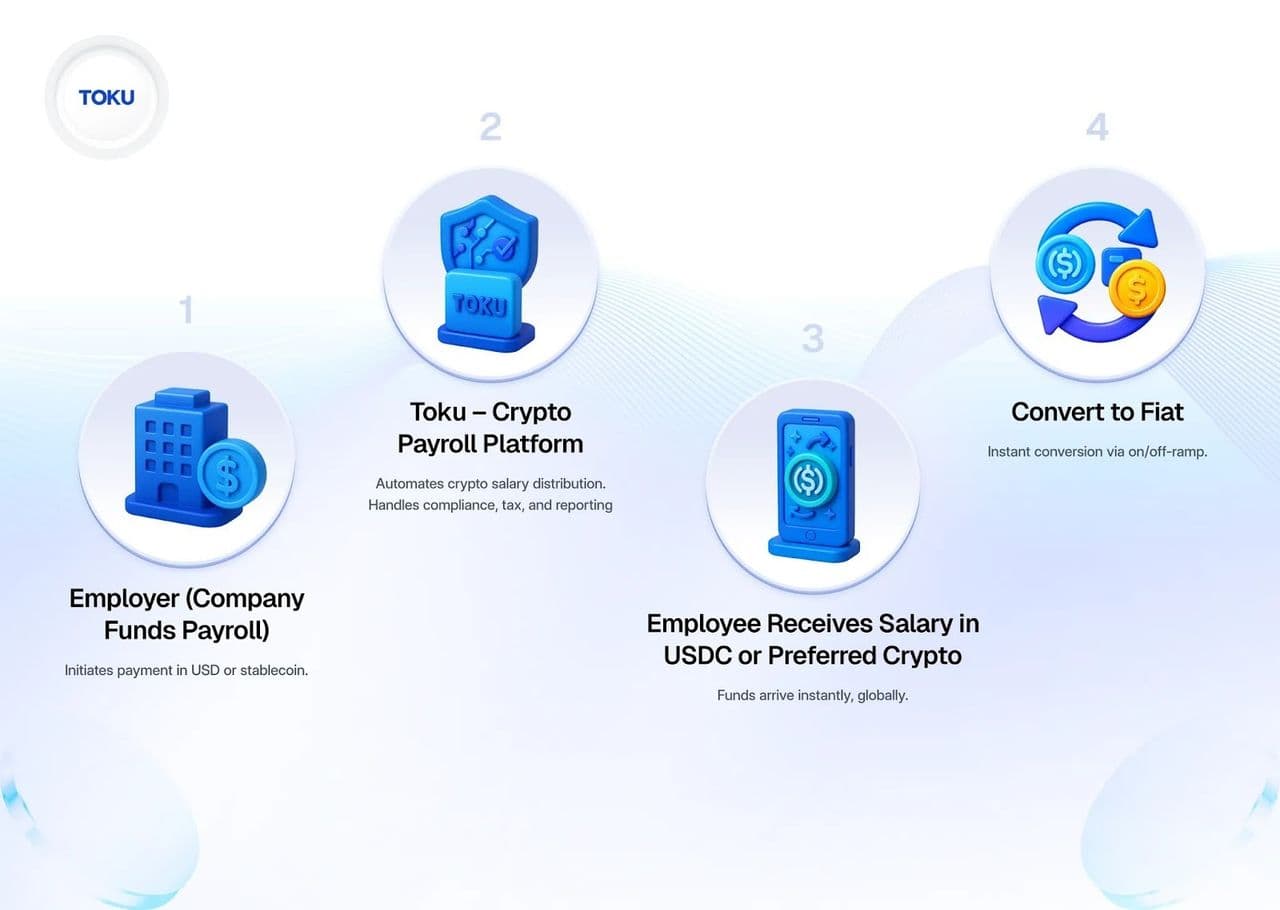
The choice between direct transfers and dedicated platforms hinges on your internal capacity. Direct transfers offer speed but expose the company to significant tax liability if reporting fails. Dedicated platforms like Eco or Toku automate the complex 1099-DA requirements, reducing error risk but adding cost.
For global teams, the GENIUS Act and pending CLARITY Act provisions favor stablecoins with clear reserve requirements. If you operate in multiple jurisdictions, an Employer of Record (EOR) model provides the highest compliance safety, though it sacrifices the speed benefits of blockchain. Evaluate your team size and legal resources to determine the right balance.
Choose the next step
Why Global Crypto Payroll Compliance Is Non-Negotiable works best as a clear sequence: define the constraint, compare the realistic options, test the tradeoff, and choose the path with the fewest hidden costs. That order keeps the advice usable instead of decorative. After each step, pause long enough to check whether the recommendation still fits the reader's actual situation. If it depends on perfect timing, unusual access, or a best-case budget, include a simpler fallback.
Watch Out for Weak Compliance Options
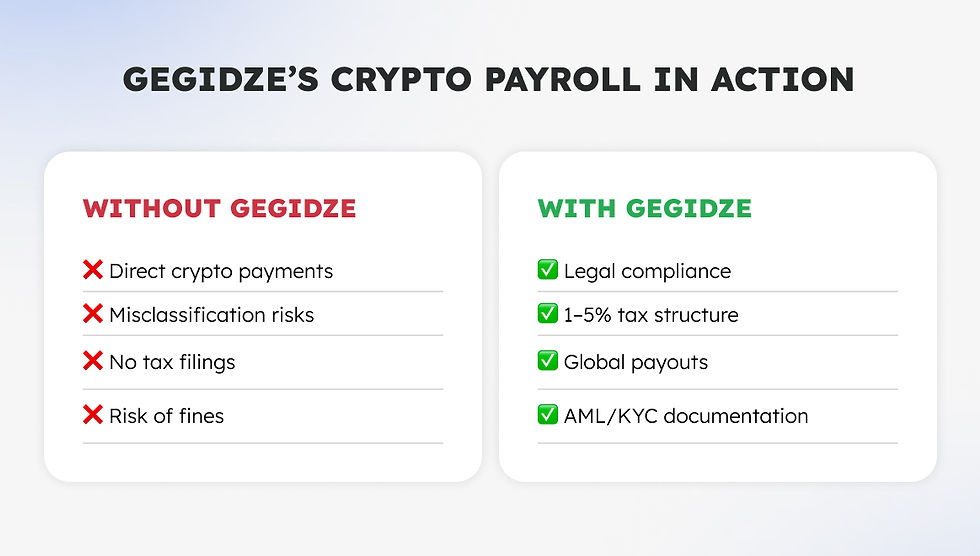
Many payroll providers market "compliance-ready" features that fail under 2026 scrutiny. The CLARITY Act and GENIUS Act have shifted the baseline, making stablecoin payroll significantly more regulated than in previous years. Providers relying on simple conversion tools rather than dedicated infrastructure often miss critical reporting nuances.
The Spreadsheet Trap
Using spreadsheets or basic wallets for payroll is a common mistake. It creates manual errors and leaves no audit trail for tax authorities. Modern crypto payroll requires dedicated platforms that automate withholding and reporting. Without this, you risk misclassifying wages and facing penalties.
Ignoring 1099-DA Requirements
Exchanges must now send 1099-DA forms for the 2025 tax year. If your payroll system doesn't support this, employees won't get proper tax documents. This is a hard requirement, not a suggestion. Ensure your provider handles this automatically.
Stablecoin vs. Fiat Payroll
| Feature | Traditional Fiat | Crypto Payroll |
|---|---|---|
| Settlement Time | 1-3 days | Minutes |
| Tax Reporting | Automated via payroll provider | Requires 1099-DA support |
| Volatility Risk | None | High (if not stablecoin) |
| Compliance Burden | Standard | Complex (CLARITY/GENIUS Act) |
Decision Point
Choose a provider that explicitly supports 1099-DA and stablecoin reserves. Avoid those that treat crypto as an afterthought. Compliance is non-negotiable in 2026.
Crypto payroll compliance 2026: what to check next
Navigating the intersection of blockchain technology and labor law requires clarity on how digital assets are treated as wages. Below are the most common practical questions regarding crypto payroll compliance in 2026.
No comments yet. Be the first to share your thoughts!