
Get stablecoin payroll 2026 right
Before processing your first stablecoin paycheck, you need to align legal, tax, and operational requirements. The 2026 Stablecoin Payroll Report from Rise highlights that $390 billion in real payments are reshaping global workforce management, but adoption requires more than just a crypto wallet. An EY survey notes that 54% of finance teams expect to adopt stablecoin payroll within 12 months, yet many stumble on the foundational setup.
Start by selecting the stablecoin. USDC is widely accepted for payroll due to its regulatory clarity and integration with major payroll providers, while USDT offers liquidity but carries higher compliance scrutiny in certain jurisdictions. Ensure your treasury can cover the stablecoin and the fiat needed for payroll taxes. Hybrid models are common: pay base salary in stablecoins and tax withholdings in fiat to simplify reporting.
Next, verify jurisdictional rules. Some regions treat stablecoin payments as property transfers, triggering capital gains events for employees. Others classify them as currency. Consult local tax authorities or a specialized legal counsel to determine withholding obligations. Without this step, you risk non-compliance penalties that outweigh the efficiency gains.
Finally, test the workflow with a small group. Run a pilot payroll to confirm that employees can receive, hold, and convert stablecoins without friction. Check that your payroll software correctly logs transactions for accounting purposes. This proof-of-concept phase prevents costly errors when scaling to your full workforce.
Work through the steps
Stablecoin payroll isn't just about switching currencies; it's about restructuring how you move money, record liabilities, and prove compliance. The 2026 Stablecoin Payroll Report highlights that $390 billion in real payments are already flowing through hybrid models, driven by new regulations and the need for speed. To replicate this, you need a clear, ordered process.
Step 1: Choose your stablecoin and network
Start by selecting the right asset and blockchain for your workforce. USDC is the dominant choice for payroll due to its regulatory clarity and widespread exchange support. Avoid volatile assets or obscure stablecoins that lack deep liquidity.
Next, pick the network. Ethereum mainnet is secure but expensive. For payroll, Layer 2 solutions like Arbitrum, Optimism, or Base offer near-instant finality with minimal fees. This ensures your employees receive their full pay without significant deduction for gas costs.
Step 2: Set up a compliant payroll provider
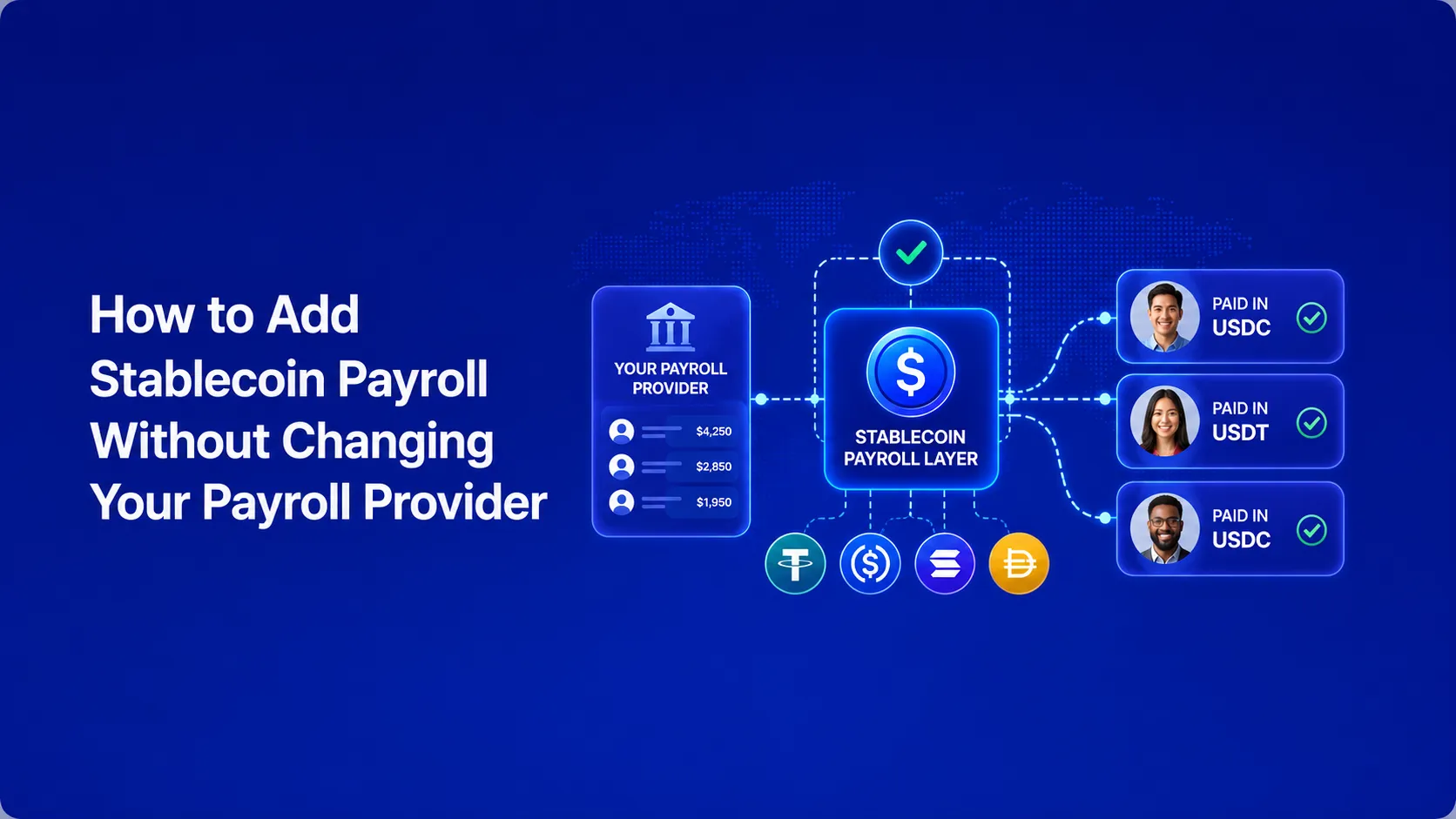
You don't need to build a crypto treasury from scratch. Use a specialized payroll provider that handles the fiat-to-crypto conversion and regulatory reporting. These platforms act as the bridge, allowing you to fund the payroll in fiat while disbursing stablecoins to employee wallets.
Ensure the provider supports "payroll as a service" features, including automated tax withholding and generation of necessary tax forms. This step is critical for maintaining compliance with local labor laws and tax authorities.
Step 3: Onboard employees with wallet guidance
Many employees are new to self-custody. Provide clear, step-by-step onboarding materials. Guide them to set up a non-custodial wallet like MetaMask or a provider-supported wallet.
Emphasize security best practices: never share seed phrases, verify contract addresses, and use hardware wallets for large balances. Offer a test payment to ensure their wallet is funded and receiving correctly before processing the full payroll.
Step 4: Execute and record the transaction
Run the payroll batch through your provider's dashboard. The system will convert your fiat funding into stablecoins and distribute them to the specified wallet addresses. This process is typically faster than traditional bank transfers, often settling in minutes rather than days.
Immediately record the transaction on your internal ledger. Note the exchange rate used, the gas fees paid, and the timestamp. This data is essential for accurate bookkeeping and future audits.
Step 5: Reconcile and report
After distribution, reconcile the blockchain transactions with your payroll records. Verify that every employee received the correct amount. Use block explorers to confirm transaction finality.
Generate compliance reports for tax purposes. Most providers offer automated export features that map crypto transactions to accounting software like QuickBooks or Xero. This simplifies the complex task of reporting crypto income for both the employer and the employee.
Common Stablecoin Payroll Mistakes to Avoid
Even with robust infrastructure, small errors in payroll execution can trigger tax liabilities, compliance violations, or failed transactions. The following mistakes are the most frequent causes of poor outcomes in stablecoin payroll programs.
Treating Stablecoins as Cash Equivalents
A frequent error is assuming stablecoins behave exactly like fiat currency. While pegged to a dollar, they are digital assets subject to blockchain network volatility, gas fees, and settlement times. Treating them as instant cash can lead to reconciliation gaps when transactions settle slower than expected. Always account for network confirmation times and transaction fees in your payroll calculation logic.
Ignoring Local Tax Withholding Rules
Stablecoin payroll does not exempt employers from local tax obligations. Many organizations mistakenly believe that paying in crypto simplifies tax reporting. This is incorrect. You must still calculate, withhold, and remit income tax, social security, and other mandatory deductions based on the employee’s jurisdiction at the time of payment. Failure to do so can result in significant penalties for both the employer and the employee.
Using Unverified or High-Risk Stablecoins
Not all stablecoins are created equal. Using lesser-known or unbacked tokens introduces counterparty risk. If the token depegs or faces regulatory scrutiny, payroll delivery halts, and employees lose trust. Stick to well-regulated, fully reserved stablecoins like USDC or USDT that have transparent reserves and comply with local financial regulations. Verify the token’s legal status in the employee’s country before onboarding.
Failing to Provide Clear Pay Stubs
Employees need transparent records of their earnings. Many stablecoin payroll systems lack integrated pay stub generation, leading to confusion about net pay, deductions, and gross amounts. Without clear documentation, employees cannot easily file taxes or dispute errors. Ensure your payroll platform automatically generates detailed, accessible pay stubs that break down fiat-equivalent values, crypto amounts, and withheld taxes.
Stablecoin payroll 2026: what to check next
Stablecoin payroll offers speed and lower fees, but it introduces new compliance and tax complexities. Here are the most common practical objections and how to handle them.
Work through The to Stablecoin Payroll

No comments yet. Be the first to share your thoughts!