
The State of Crypto Payroll in 2026
Crypto payroll has moved from experimental curiosity to operational necessity for global teams. In 2026, the practice centers on blockchain-based assets, predominantly stablecoins, integrated directly into standard payroll workflows for employees and contractors. This shift prioritizes operational efficiency, cost reduction, and global accessibility over the novelty or speculation that characterized early adoption. The underlying infrastructure now supports seamless cross-border compensation, bypassing traditional banking rails that often lag or impose high fees.
Adoption rates are climbing steadily as businesses recognize the tangible benefits of instant settlement. Current data indicates that 25% of businesses now use cryptocurrency for payroll, with projections reaching 35-40% by late 2026. This growth is driven by the need for faster liquidity and reduced friction in hiring international talent. The market itself has matured significantly, having reached a valuation of $1.48 billion in 2024, signaling strong institutional confidence in the sector's long-term viability.
Market Growth and Stability
The financial metrics behind crypto payroll reflect a sector stabilizing after years of volatility. While broader altcoin markets face headwinds from token unlocks and diminished liquidity, the payroll niche remains anchored by stablecoins. These assets provide the price stability required for regular wage payments, ensuring employees receive predictable value regardless of broader market fluctuations.
This stability is crucial for trust. Employees are more likely to accept crypto compensation when the asset they receive does not swing in value between paychecks. Consequently, companies are focusing on platforms that offer robust stablecoin support and automated tax compliance, particularly as regulatory frameworks like the new 1099-DA requirements take effect in 2026. The market is consolidating around providers that can navigate this complex regulatory landscape while delivering the speed and low cost that define the crypto payroll advantage.
IRS tax updates and compliance
The 2026 tax year introduces a significant shift in how cryptocurrency transactions are reported, directly impacting employers and employees using crypto payroll platforms. Effective January 1, 2026, brokers are required to report cost basis on the new 1099-DA form for crypto transactions. This means that the cost of acquiring the digital asset is now explicitly documented for tax purposes, rather than leaving it to the taxpayer to calculate.
For employers, this change simplifies compliance but requires updated payroll systems. Previously, determining the taxable value of a crypto paycheck often relied on the fair market value at the time of payment, with the employee tracking their own cost basis upon sale. Now, the platform facilitating the transaction or the broker holding the funds must provide the acquisition cost. This reduces the administrative burden on payroll managers but increases the need for accurate record-keeping across the entire payout chain.
Employees will receive a 1099-DA that clearly states what they paid for the crypto they received or sold. This transparency helps prevent disputes with the IRS regarding capital gains or losses. However, it also means that every transaction, including payroll deposits, is now part of a formal tax record. Workers must ensure that their payroll providers are compatible with these new reporting standards to avoid gaps in their tax documentation.
The integration of these rules into crypto payroll means that companies can no longer treat digital asset compensation as an opaque process. The IRS is closing the loop on crypto taxation by ensuring that both the income event and the underlying cost basis are visible. Employers should audit their payroll vendors to confirm they are prepared to issue or support these 1099-DA forms for the 2026 tax year.
Why stablecoins are the default for crypto payroll
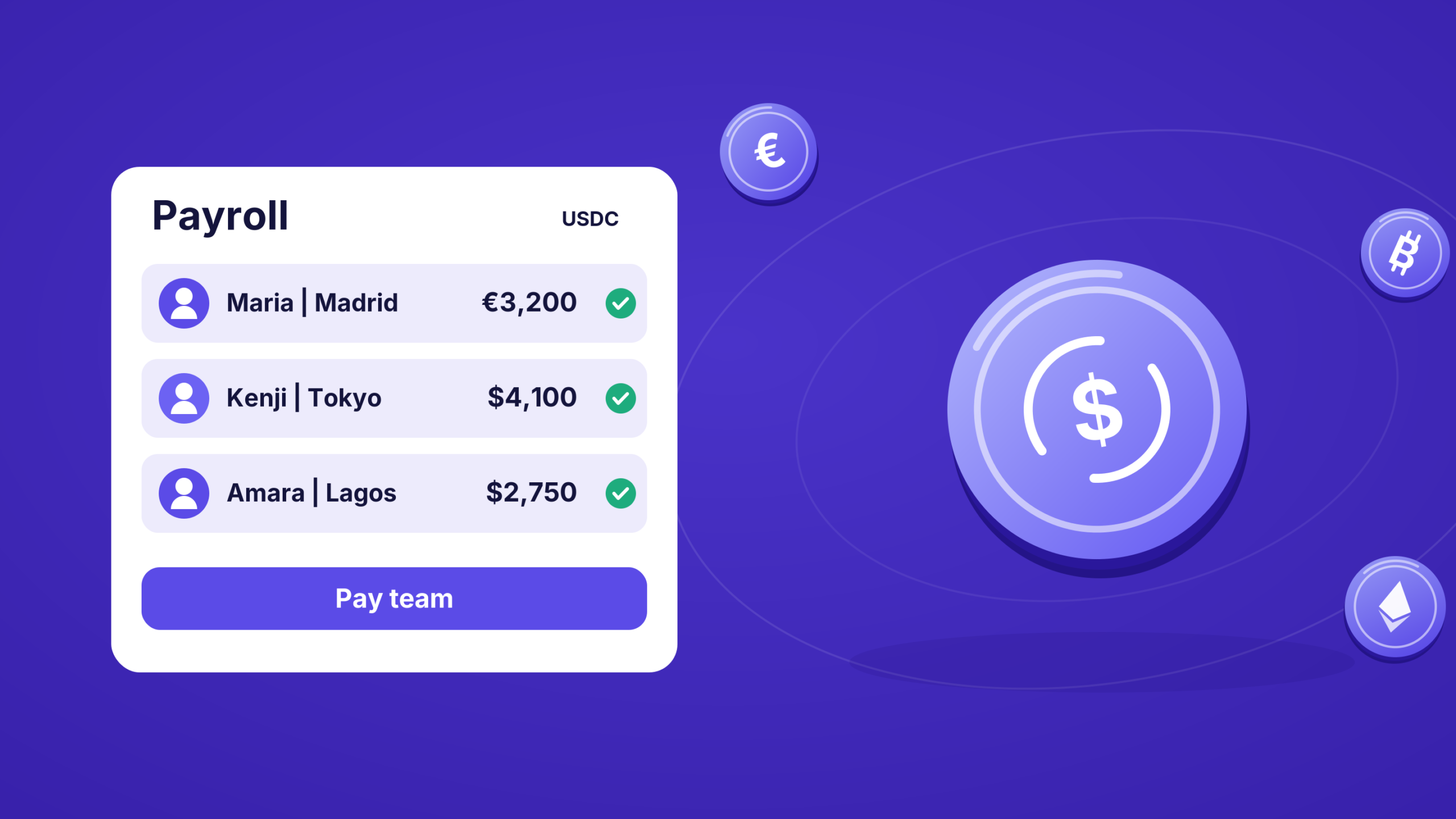
Stablecoin payroll has shifted from a niche experiment to the standard for global compensation in 2026. The primary driver is simple: volatility. Using assets like USDC or USDT eliminates the risk that an employee’s paycheck will lose value between approval and receipt, a problem that plagued early crypto payroll implementations. For employers, it means payroll budgets are predictable; for workers, it means their wages retain their purchasing power regardless of broader market swings.
Settlement speed is the second major advantage. Traditional cross-border transfers often take days to clear and incur high fees through intermediary banks. Stablecoin transactions settle in minutes on-chain, 24/7, with significantly lower transaction costs. This efficiency is particularly critical for remote teams distributed across different time zones and banking systems. The GENIUS Act and the EU’s Markets in Crypto-Assets (MiCA) regulation have further solidified this shift by providing clearer legal frameworks for stablecoin issuers, reducing compliance uncertainty for payroll providers.
While Bitcoin and other volatile cryptocurrencies offer interesting speculative opportunities, they are unsuitable for regular wage payments. The regulatory clarity surrounding stablecoins under current 2026 frameworks makes them the only practical choice for businesses prioritizing operational efficiency and employee financial stability. As the landscape matures, stablecoin payroll is no longer just an alternative—it is the operational backbone for forward-thinking global companies.
Top crypto payroll platforms compared
The crypto payroll market remains fragmented in 2026, with providers carving out distinct niches rather than offering a single universal solution. Choosing the right tool depends less on feature lists and more on your operational reality: whether you hire contractors globally, need to pay employees in specific jurisdictions, or require seamless integration with existing HR software.
Bitwage has operated since 2014, focusing on converting crypto to fiat for workers in over 170 countries. It serves as a bridge for companies that want to pay in digital assets but need to settle in local currencies to comply with regional labor laws. Deel, a broader global employment platform, has integrated crypto payroll to support its massive contractor network, allowing payments in stablecoins while handling the complex compliance and contracting infrastructure behind the scenes.
Other specialized tools like MoonPay and Coinbase Commerce cater to different ends of the spectrum. MoonPay focuses on the on-ramp experience, helping companies and individuals convert fiat to crypto efficiently for payroll distribution. Coinbase Commerce provides the infrastructure for direct crypto payments, appealing to decentralized organizations that prefer self-custody and direct wallet-to-wallet settlements without an intermediary.
The table below compares these leading platforms based on their core capabilities, supported regions, fee structures, and stablecoin options. This comparison helps you identify which platform aligns with your specific compliance and operational needs.
| Platform | Primary Focus | Supported Regions | Fee Structure | Stablecoin Support |
|---|---|---|---|---|
| Bitwage | Crypto-to-Fiat Conversion | 170+ countries | ~1% per transaction | USDT, USDC, BTC, ETH |
| Deel | Global Contractor & Employee Platform | 150+ countries | $49–$199/month + transaction fees | USDC, USDT |
| MoonPay | On-Ramp Infrastructure | Global (regulated jurisdictions) | Variable based on volume | USDC, USDT, DAI |
| Coinbase Commerce | Direct Crypto Payments | Global | 0.5% per transaction | BTC, ETH, USDC, DOGE |
Implementation checklist for employers
Adopting crypto payroll requires more than selecting a payment rail; it demands a structured integration of legal compliance, tax reporting, and employee onboarding. Employers must align their internal workflows with the IRS’s evolving digital asset guidelines to avoid penalties.
Select a payroll provider that explicitly supports US tax reporting. Ensure the platform can generate accurate 1099 forms and handles the cost basis calculations required for the 2026 tax year updates.

Configure the system to treat crypto payments as taxable income. The IRS views digital assets as property, meaning standard withholding rules apply. Set up automatic conversion to fiat or stablecoins if you prefer to mitigate volatility risk for your business.
Communicate the benefits and tax implications to your team. Provide clear documentation on how to receive, store, and report their crypto earnings. Ensure employees understand they are responsible for any capital gains if they hold the assets after receipt.
No comments yet. Be the first to share your thoughts!