
Get crypto payroll 2026 right
Crypto payroll is a fragmented market in 2026. Before you launch, you must align three moving parts: your legal entity structure, the payroll vendor’s capabilities, and the employee’s tax jurisdiction. Skipping this alignment creates compliance gaps that are expensive to fix later.
First, define the legal relationship for each worker. Contractors and employees face different tax treatments globally. Bitwage has paid workers across 170 countries since 2014, demonstrating that cross-border compliance requires localized knowledge. If you hire through a Deel-like employer of record, verify that their crypto payout module covers your target countries specifically.
Next, select a vendor that matches your risk tolerance. On average, employees interested in crypto want 27% of their paycheck allocated to it. This means your platform must handle partial fiat conversions seamlessly. Choose a provider that offers automatic tax withholding in major jurisdictions to reduce administrative burden.
Finally, communicate clearly with your team. Crypto payroll is no longer hypothetical. Set expectations about volatility and tax implications upfront. This prevents confusion when workers see fluctuating values in their wallets.
Set up your crypto payroll workflow
Crypto payroll requires a structured approach to remain compliant and tax-efficient. The process moves from legal entity setup to automated distribution. Follow this sequence to launch your first batch.

Start by establishing the legal entity responsible for payroll. Most jurisdictions treat crypto payments as property, meaning your entity must handle standard payroll taxes and filings. Verify that your business registration allows for digital asset transactions and that you have the necessary banking relationships for fiat off-ramping.
Choose a platform that handles tax withholding and reporting. Platforms like Bitwage or Deel integrate with your existing HR stack but add crypto settlement layers. Ensure the platform supports the specific cryptocurrencies your team prefers and provides clear documentation for tax authorities regarding the fair market value at the time of payment.
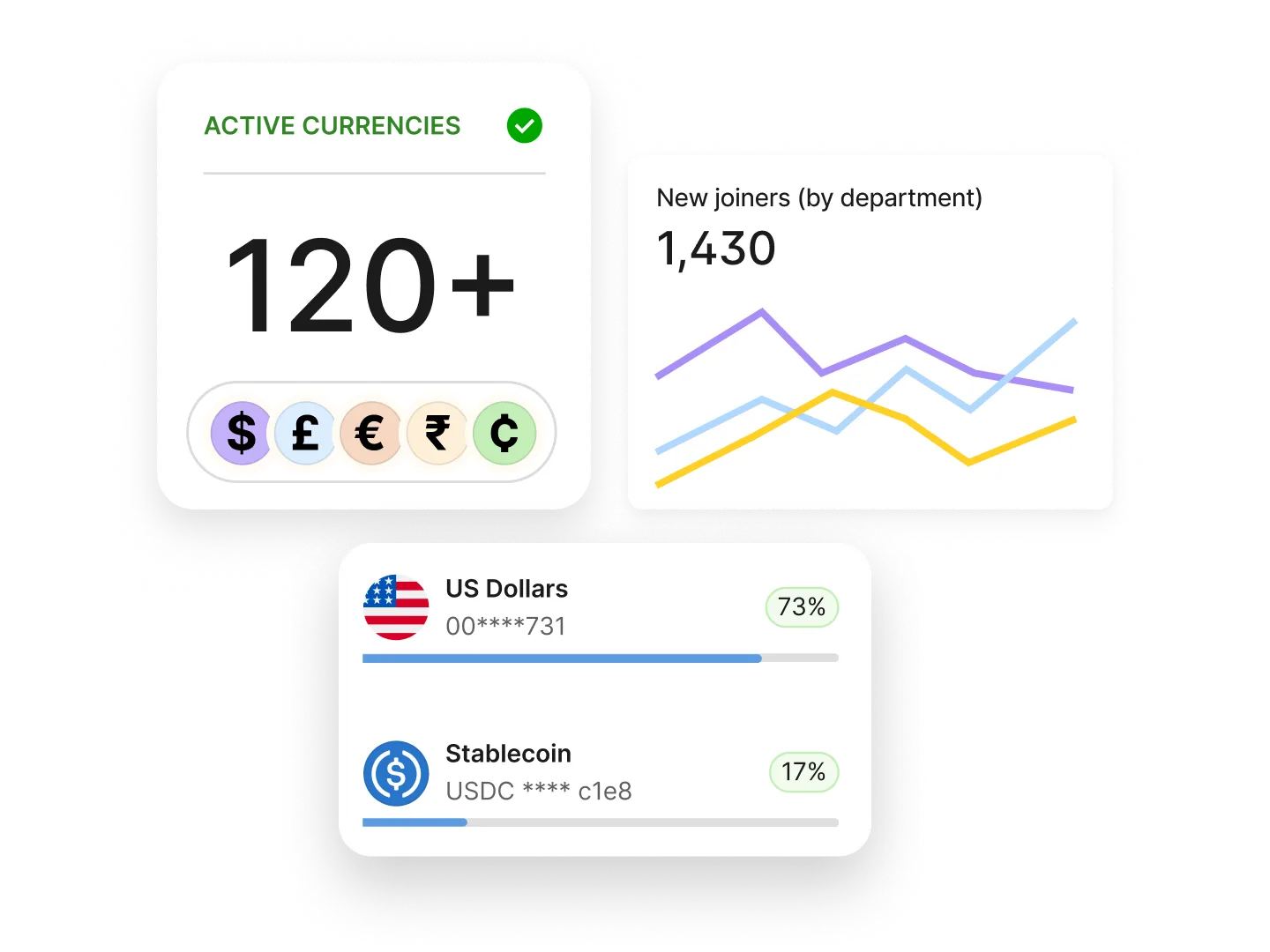
Collect explicit consent from each employee regarding their payment split. Research indicates employees often prefer a hybrid model, with a portion paid in stablecoins and the rest in fiat. Set clear daily or monthly transaction limits within the platform to manage volatility risk and prevent accidental over-allocations.

Before processing real funds, send test transactions to verify wallet addresses and network compatibility. Use zero-value or minimal-amount transactions to confirm that the blockchain network is operational and that the employee can successfully receive and access the funds. This step prevents costly delays and failed payments.
Process the payroll batch according to your schedule. Simultaneously, generate tax reports from the platform that detail the fiat-equivalent value of each payment at the time of issuance. These records are critical for year-end filings and proving that taxes were withheld correctly on the property-based income.
Fix common crypto payroll mistakes
Crypto payroll promises speed and lower fees, but the margin for error is thin. A single misconfigured transaction can trigger tax liabilities, compliance fines, or employee dissatisfaction. These are the most frequent pitfalls and how to avoid them.
Misconfiguring tax withholding and reporting
Treating crypto payments like traditional fiat is the fastest way to create a compliance nightmare. In many jurisdictions, paying an employee in Bitcoin or Ethereum is a taxable event. If you fail to withhold income tax, social security, or unemployment contributions at the point of payment, you remain liable for the full amount.
Most errors stem from assuming the payroll provider handles everything. While platforms like Bitwage or Deel facilitate the transfer, they often act as intermediaries rather than employers of record. You must verify that your system automatically calculates and remits local taxes before the employee receives their funds. Relying on manual spreadsheets for crypto tax codes is a recipe for audit failure.
Ignoring volatility and exchange rate risk
Crypto assets fluctuate wildly. If you commit to paying a worker $5,000 worth of ETH on Monday, but the price drops 10% by the time you execute the transaction, you have effectively reduced their salary. Conversely, if the price spikes, you overpay.
To fix this, use stablecoins (USDC, USDT) for the payroll leg, or configure your platform to lock in the exchange rate at the moment of payroll calculation. Never send volatile assets unless the employee has explicitly opted into that risk. Even then, most workers prefer the stability of fiat-equivalent value. As noted by industry reports, employees interested in crypto often want only a portion of their paycheck allocated to digital assets, not the whole amount.
Overlooking jurisdictional restrictions
Not every country allows crypto payroll. Some nations have banned cryptocurrency transactions entirely, while others require specific licenses for crypto service providers. Sending payroll to a worker in a restricted jurisdiction can freeze funds, violate local laws, or expose your company to sanctions.
Before onboarding global talent, verify the legal status of crypto payments in their residence. Use a platform with built-in geo-compliance checks or consult local legal counsel. Do not assume that because a worker is a crypto native, they can legally receive crypto wages in their country. Always check the latest regulatory guidance for the specific region.
Crypto payroll 2026: what to check next
Before committing to a new payroll workflow, address the practical objections regarding tax liability, market volatility, and platform reliability. The answers below reflect the current regulatory and operational landscape for stablecoin and crypto payroll in 2026.
No comments yet. Be the first to share your thoughts!