


In today’s hyper-connected world, remote teams span continents, demanding payroll solutions that match their agility. Traditional wires drag with high fees, delays, and prying eyes on public blockchains. Enter private USDC payroll: a disciplined approach to stablecoin cross-border payroll that shields salaries from public exposure while delivering speed and compliance. Platforms like Cross-Border Payroll harness USDC’s stability with privacy layers, empowering startups and digital nomads to pay global team USDC payments seamlessly.
This shift isn’t hype; it’s adaptation in action. Recent partnerships underscore the momentum. Remote teamed up with Stripe in December 2024 to payout contractors in 69 countries via USDC on Base, slashing settlement times to near-instant. World App’s November 2025 pilot introduced virtual bank accounts converting deposits to USDC, bridging fiat and crypto worlds. Paystand’s acquisition of Bitwage that same month embedded USDC salaries into enterprise flows, proving confidential USDC salaries scale.
Unlocking Privacy with ZK Tech in Payroll
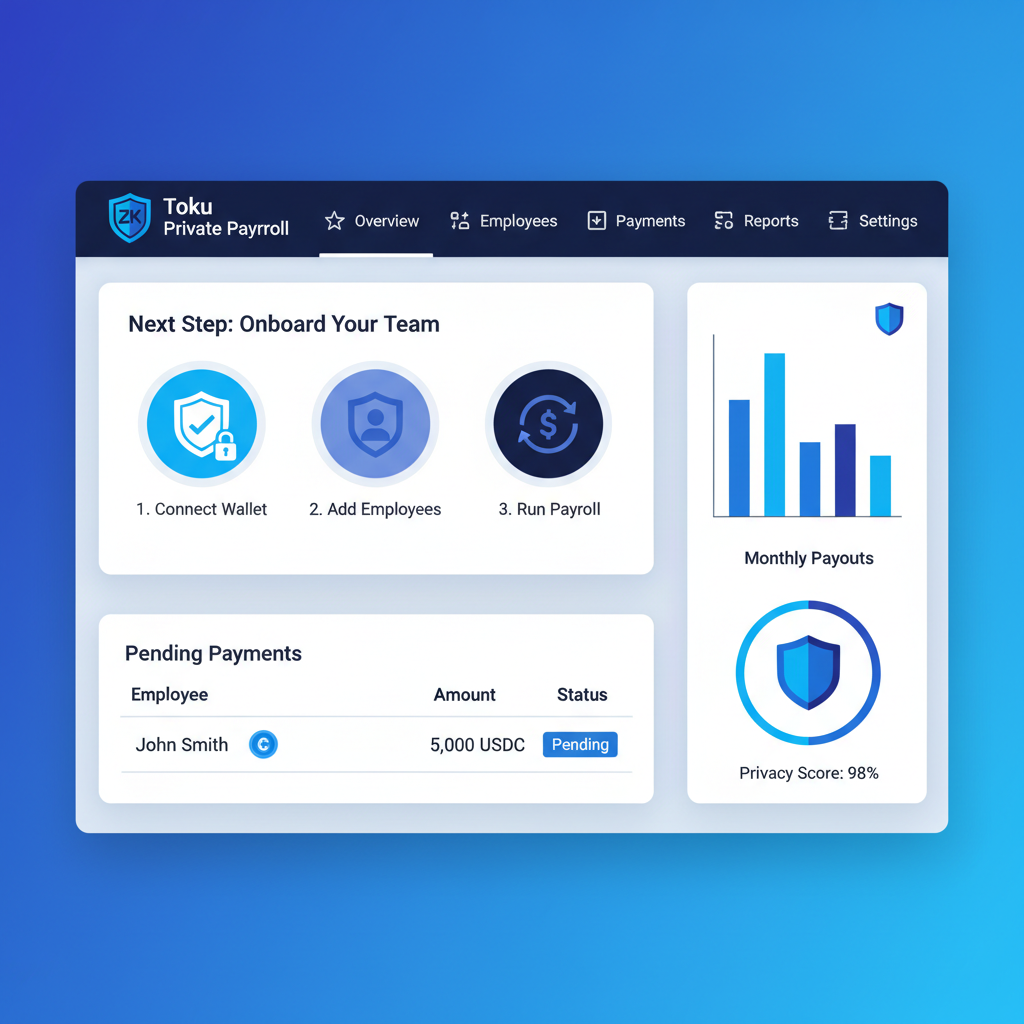
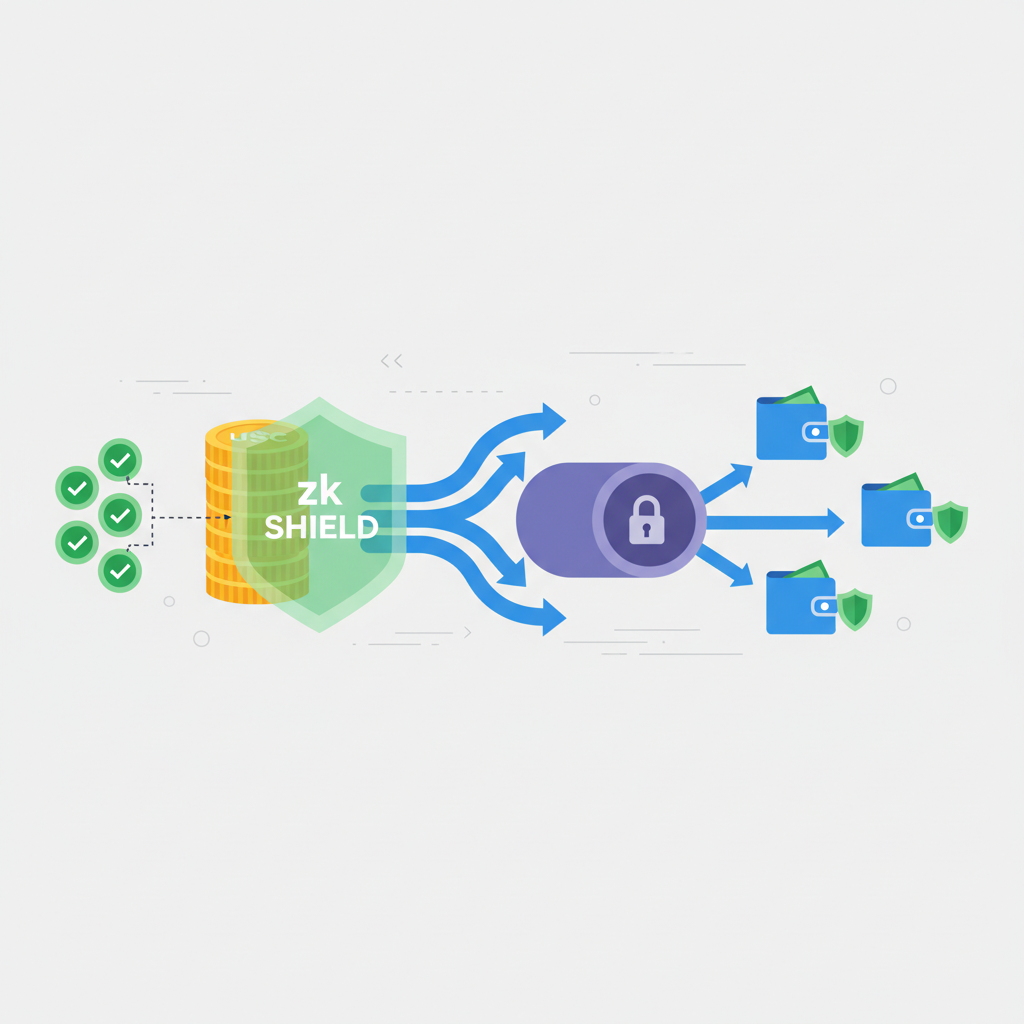
Privacy defines the next era of crypto payroll privacy. Aleo, Toku, and Paxos Labs just launched the first zk-private stablecoin payroll, integrating with ADP, Workday, and UKG. This zero-knowledge solution conceals transaction details on a public ledger, vital for enterprises in a $55T payroll market. Employees opt-in for instant dollar access without broadcasting salaries or employer identities.
Enterprises can now deliver private, compliant stablecoin payroll through Toku’s native integrations.
Contrast this with transparent chains: every USDC transfer exposes amounts and addresses, inviting risks from hackers or regulators. ZK proofs change that, verifying payments without revealing data. Rise, backed by Circle, funds payroll from banks into USDC, while P100 converts Euros to stablecoins for global workforces. These tools demand discipline; choose providers with proven audits and compliance rails.
Why Remote Teams Demand Confidential Payroll Now
Freelancers and remote workers face volatility in traditional systems: currency swings, bank holidays, intermediary cuts up to 7%. Stablecoins like USDC counter this, pegged 1: 1 to the dollar for predictability. RebelFi touts 95% cost reductions plus 6-9% APY on idle funds. TransFi highlights faster, cheaper security for freelancers versus wires.
But privacy elevates it. Public blockchains log everything eternally, doxxing incomes in bear markets or tax seasons. Private USDC payroll opts for shielded ledgers or mixers, ensuring crypto payroll privacy. Request Finance guides note stablecoins solve remote challenges: 24/7 availability, sub-minute confirmations, borderless reach.
USD Coin (USDC) Price Prediction 2027-2032
Forecasts in the context of stablecoin payroll adoption for remote teams, emphasizing peg stability amid growing enterprise use
| Year | Minimum Price (Bearish Scenario) | Average Price | Maximum Price (Bullish Scenario) |
|---|---|---|---|
| 2027 | $0.95 | $1.00 | $1.05 |
| 2028 | $0.96 | $1.00 | $1.04 |
| 2029 | $0.97 | $1.00 | $1.03 |
| 2030 | $0.98 | $1.00 | $1.02 |
| 2031 | $0.99 | $1.00 | $1.01 |
| 2032 | $0.995 | $1.00 | $1.005 |
Price Prediction Summary
USDC is expected to robustly maintain its $1.00 USD peg through 2032, with prediction ranges narrowing progressively due to surging payroll adoption, enhanced liquidity, and institutional integrations. Bearish mins reflect potential short-term depegs in volatile markets, while bullish maxes account for demand premiums from cross-border payroll demand.
Key Factors Affecting USD Coin Price
- Massive payroll adoption via platforms like Rise, Toku, Remote, and Paystand, driving on-chain demand
- ZK-privacy tech from Aleo/Paxos enabling confidential enterprise payments
- Regulatory advancements favoring compliant stablecoins like USDC
- Competition from USDT/USDe but USDC’s transparency and Circle reserves providing edge
- Crypto market cycles: bull runs boosting liquidity, bears testing peg resilience
- Global economic factors and dollar strength influencing peg stability
Disclaimer: Cryptocurrency price predictions are speculative and based on current market analysis.
Actual prices may vary significantly due to market volatility, regulatory changes, and other factors.
Always do your own research before making investment decisions.
Discipline here means vetting: Does the platform support opt-in privacy? Multi-sig wallets? Compliant rails like Toku’s? Cross-Border Payroll excels, streamlining USDC payroll for remote teams without exposure. Current market reflects stability; Multichain Bridged USDC on Fantom holds at $0.0180, down 0.0399% in 24 hours from a high of $0.0206.
Streamlining Setup for Global Compliance
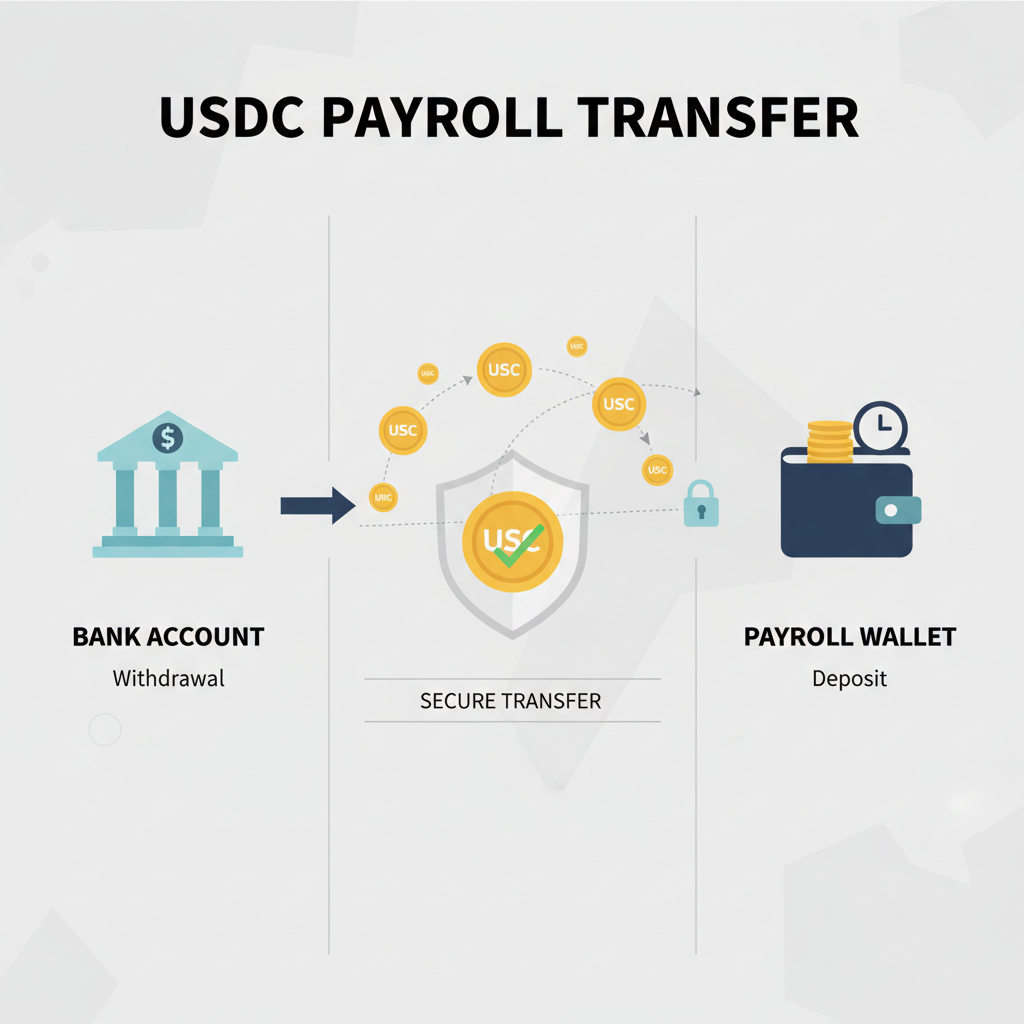
Implementation demands balance: speed without sacrificing security. Fund via bank, convert to USDC, distribute privately. Rise enables local currencies or stablecoins; Toku adds payroll software hooks. For tech teams, it’s transformative: pay contractors in Vietnam or Argentina instantly, no forex headaches.
Start with compliance checks: verify KYC for teams across jurisdictions, ensuring FATF alignment. Platforms like Cross-Border Payroll automate this, integrating USDC payroll with embedded wallets for seamless onboarding. Next, batch salaries into shielded transactions, leveraging ZK tech to obscure details while auditors verify totals. Finally, enable instant conversions to local fiat via ramps, minimizing exposure. This workflow cuts setup from weeks to hours, disciplined execution yielding 95% cost savings as RebelFi demonstrates.
Set Up Private USDC Payroll: Secure, Shielded Salaries in 4 Disciplined Steps

Real-World Wins: Case Studies in Confidential Salaries
Tech startups lead adoption. One dev team in Southeast Asia ditched wires after forex ate 5% monthly; switching to stablecoin cross-border payroll via P100 saved thousands, with USDC holding steady at $0.0180 on Fantom bridge despite minor dips. Enterprises echo this: Toku’s integrations let ADP users opt into private stablecoins, processing millions confidentially. Paystand-Bitwage merger streamlined USDC for 10,000 and contractors, proving scalability.
Freelancers thrive too. TransFi reports stablecoins slash payment times from 5 days to minutes, vital for digital nomads hopping borders. Request Finance outlines benefits: no weekends off, no currency risk, full transparency on rails minus public logs. Opinion: this isn’t optional; in volatile markets, global team USDC payments demand privacy to shield against doxxing or competitive spying.
Risks, Rewards, and the Disciplined Path Forward
Balance tempers enthusiasm. Volatility? USDC’s peg endures; Multichain Bridged USDC (Fantom) trades at $0.0180, 24h low matching current after -0.0399% shift from $0.0206 high. Smart contract bugs? Audited platforms mitigate. Regulation? Compliant providers like Circle-backed Rise navigate OFAC lists effortlessly. Rewards outweigh: 6-9% yields on funds, per RebelFi, turning payroll into a generator.
| Platform | Privacy | Integrations | Cost Savings |
|---|---|---|---|
| Cross-Border Payroll | ZK-Shielded | Embedded Wallets | 95% |
| Rise | Stablecoin Opt-in | Bank Funding | High |
| Toku | ZK Private | ADP/Workday | Enterprise |
Discipline means selecting audited, multi-chain support. Cross-Border Payroll stands out, offering how to pay remote teams with USDC via intuitive dashboards. World App’s virtual accounts preview mainstreaming, but privacy lags without ZK.
Adapt now. As USDC payroll matures, remote leaders who prioritize crypto payroll privacy gain edge: faster teams, loyal talent, lean operations. Multichain Bridged USDC (Fantom) at $0.0180 underscores stability amid flux. Platforms evolve; your payroll shouldn’t lag. Empower your distributed workforce with private, precise confidential USDC salaries, analyzing risks to achieve borderless efficiency.
Explore USDC payroll with embedded wallets for your team today.
About the Author