
Crypto payroll in 2026: what actually works
Paying global teams in stablecoins solves real friction, but it introduces new compliance layers. In 2026, the most reliable approach combines a dedicated payroll processor with a clear legal structure for employee payouts.
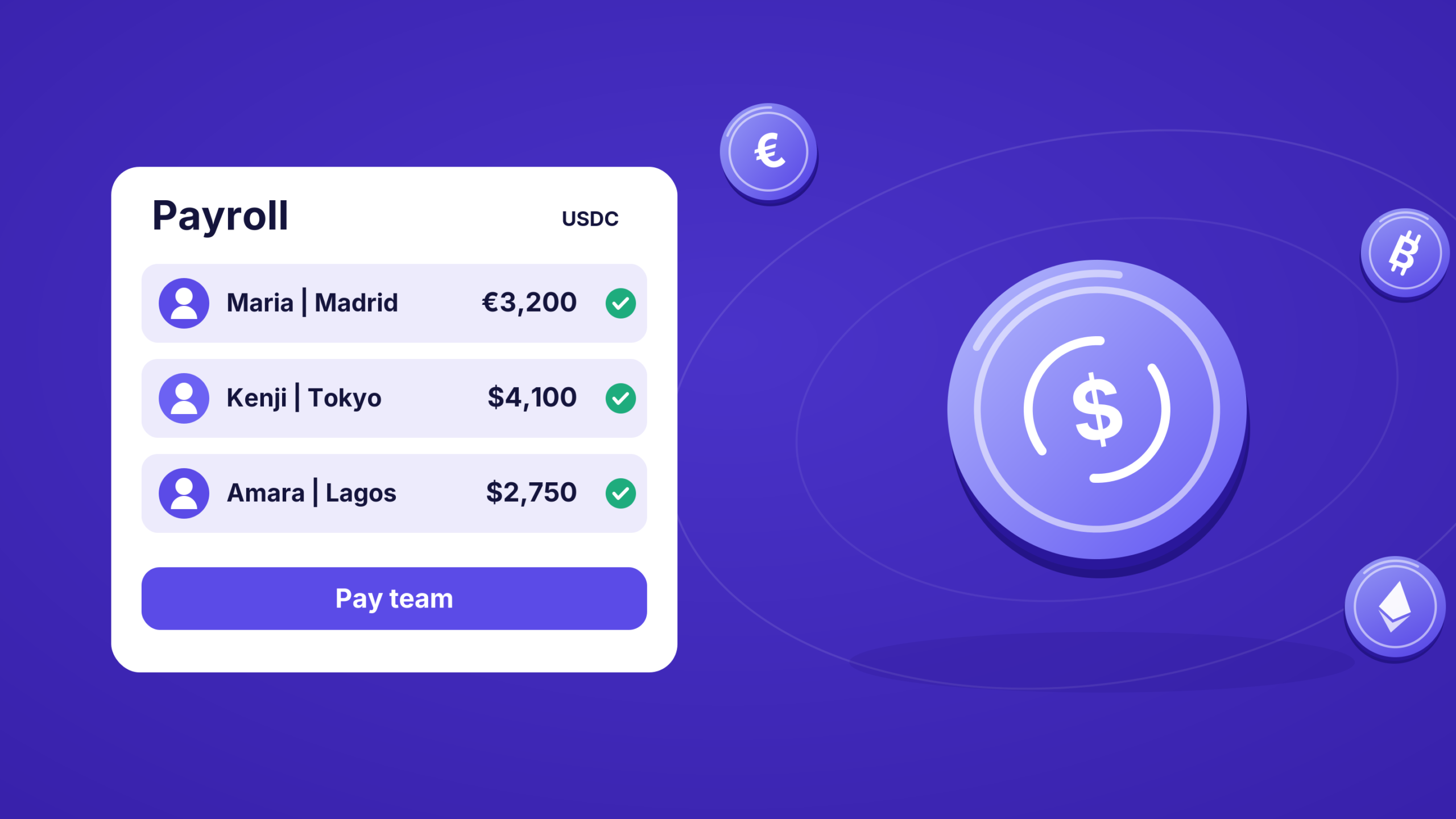
The primary advantage remains speed and cost. Traditional wire transfers take days and incur high foreign exchange fees. Stablecoin settlements settle in minutes with near-zero fees, regardless of the employee’s location. This makes it ideal for remote-first companies hiring across borders.
However, "crypto payroll" is rarely just about the blockchain. It’s about the bridge between on-chain transactions and off-chain reality. Employees still need fiat for rent and groceries. Therefore, the best 2026 setups use platforms that handle the conversion automatically, shielding employees from volatility while keeping the employer in control of treasury.
The core decision isn't whether to use crypto, but which infrastructure layer handles the tax reporting and fiat off-ramping. Platforms like Eco and RiseWorks have emerged as leaders by bundling these features, turning a complex compliance headache into a streamlined workflow.
Crypto payroll 2026 choices that change the plan
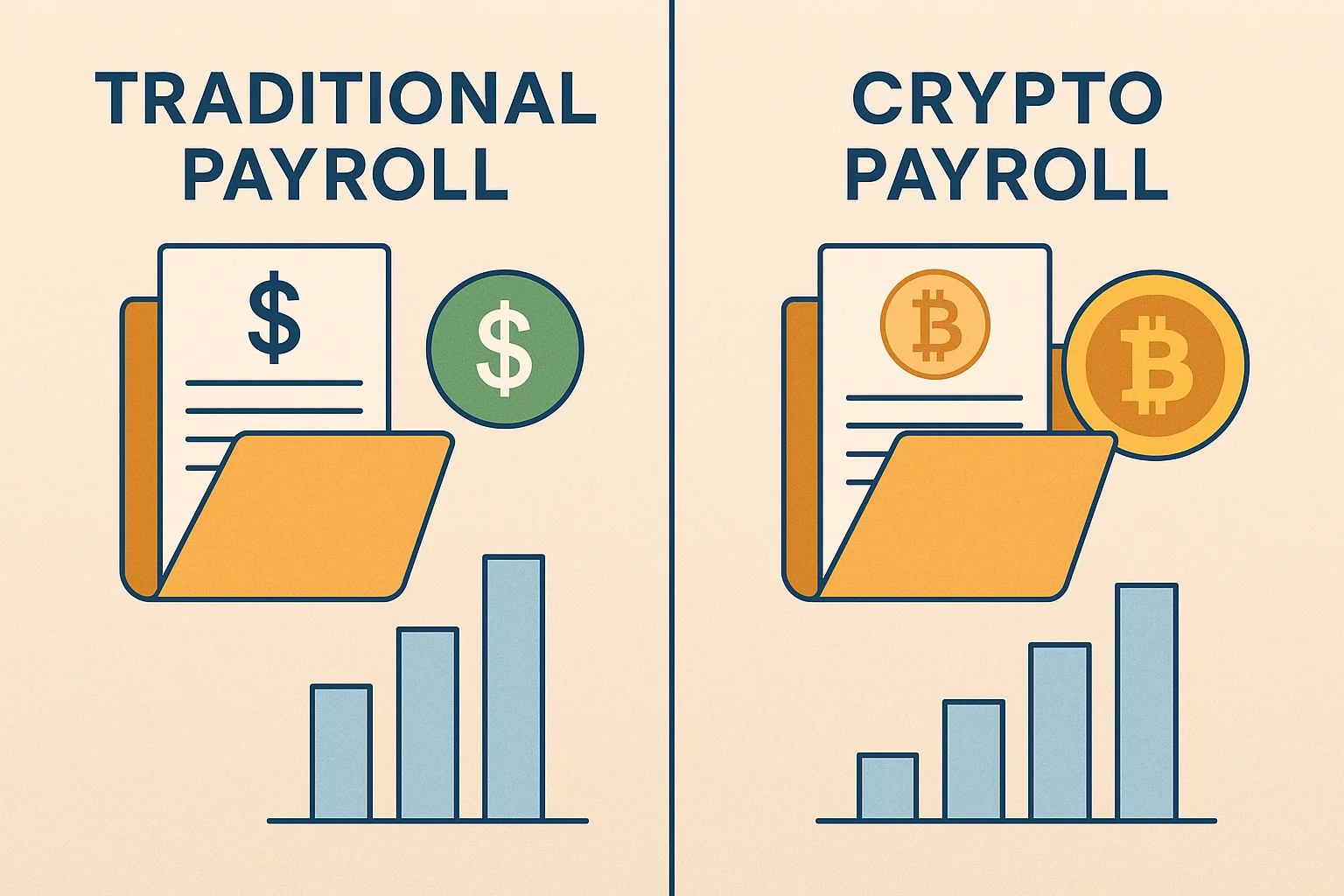
Moving payroll to stablecoins removes banking friction but introduces new compliance and operational variables. The decision hinges on whether your team values speed and lower fees over the regulatory simplicity of fiat. Most employers today use a hybrid model: base salary in local currency, with optional bonuses or equity in crypto, to satisfy labor laws that often require minimum wage payments in legal tender.
The following comparison highlights how leading platforms differ in custody, tax handling, and coverage. These factors determine whether the switch reduces your administrative burden or creates a new compliance headache.
| Feature | Fiat Rail | Stablecoin Native | Tax Compliance | Custody Model |
|---|---|---|---|---|
| Traditional Providers (e.g., Deel, Remote) | Full support | Limited or none | Automated local filing | Bank accounts |
| Hybrid Platforms (e.g., Eco, RiseWorks) | Partial support | Full support | Variable; often manual | Custodial or non-custodial |
| Pure Crypto Payroll (e.g., Bitwage) | None | Full support | Employee responsibility | Non-custodial (self-custody) |
Cost and Speed
Stablecoin transactions settle in minutes, not days, and fees are often fractions of a cent compared to wire transfer costs. This speed is critical for remote teams in regions with slow banking infrastructure. However, network congestion can spike fees temporarily. For high-volume payroll, the savings are consistent, but you must account for gas fees if you route through multiple chains.
Regulatory and Tax Risk
Fiat payroll providers handle tax withholding and local labor law compliance automatically. With stablecoin-native platforms, this burden often shifts to the employer or employee. In the U.S., the IRS treats crypto as property, meaning every payroll transaction is a taxable event. If your platform does not automate tax reporting, you risk penalties for non-compliance. Always verify if the platform supports automated W-2 or local tax form generation before committing.
Custody and Security
Custodial platforms hold funds on your behalf, offering recovery options if keys are lost but introducing counterparty risk. Non-custodial models give you full control, aligning with crypto principles, but require robust internal security protocols. For most mid-sized companies, a hybrid approach—using a custodial solution for payroll distribution and self-custody for treasury—balances security with operational ease.
How to choose the right stablecoin payroll platform
Selecting a payroll provider is less about finding the "best" tool and more about matching the platform to your team's geographic spread and risk tolerance. Most employers adopt a hybrid model: paying base salaries in fiat to meet local labor laws while offering bonuses or equity in stablecoins. Your platform must support this split without creating tax nightmares.
1. Verify regulatory and tax compliance
Before signing up, confirm that the platform provides the necessary reporting tools for your jurisdiction. Crypto payroll is taxable income in most countries, and the platform should auto-generate 1099s (U.S.) or equivalent local tax forms. If the platform does not handle the tax withholding or reporting, you will need a separate accountant to track every transaction. Prioritize providers with clear compliance documentation over those with flashy marketing.
2. Check country coverage and fiat on/off ramps
Not all stablecoin platforms operate in every country. Some restrict services due to local banking regulations. Ensure the platform supports direct fiat withdrawals to your employees' local bank accounts. If employees must manually convert stablecoins to fiat on a third-party exchange, you expose them to price volatility and additional fees. The ideal platform handles the conversion internally, ensuring employees receive their full net pay in their local currency.
3. Evaluate custody and security models
Who holds the private keys? Platforms fall into two categories: self-custody (you hold the keys) and custodial (the platform holds them). Self-custody offers maximum control but requires robust internal security procedures. Custodial platforms reduce your administrative burden but introduce counterparty risk. For most small-to-mid-sized teams, a regulated custodial solution with insurance coverage is the safer starting point.
4. Compare fee structures and settlement speed
Look beyond the headline "zero fees." Check for hidden costs like withdrawal fees, FX conversion spreads, or monthly platform subscriptions. Settlement speed is also critical: some platforms settle in minutes, while others take days depending on the blockchain network. For global teams, a platform that settles on low-fee networks (like Polygon or Stellar) can save significant money on transaction costs compared to Ethereum Mainnet.
5. Assess integration capabilities
Your payroll platform should integrate with your existing HRIS (like Gusto, Deel, or Rippling) to automate data flow. Manual data entry increases the risk of errors and fraud. Look for platforms that offer API access or native integrations with your current tools. This ensures that when an employee is added or removed from your HR system, the payroll system updates automatically.
| Feature | Self-Custody | Custodial |
|---|---|---|
| Control | High | Low |
| Security Responsibility | You | Provider |
| Ease of Use | Low | High |
| Regulatory Compliance | You | Provider |
Map your employees' countries. Identify which jurisdictions have strict crypto regulations or require fiat-only payments. This will narrow down your platform options significantly.
Decide if your company has the technical expertise to manage private keys. If not, prioritize regulated custodial platforms with insurance coverage.
Run a small test payment. Verify how quickly and cheaply your employees can convert stablecoins to their local currency and deposit it into their bank accounts.
Common Mistakes in Crypto Payroll Automation
Automating payroll with stablecoins introduces compliance risks that manual processes often mask. The primary error is assuming stablecoins are equivalent to fiat. They are digital assets, which triggers tax reporting requirements for both employer and employee in many jurisdictions, including the United States under IRS guidance. Treating them as simple currency without tracking fair market value at the time of payment creates audit liabilities.
Another frequent pitfall is ignoring the custody model. Platforms that allow employees to withdraw directly to personal wallets shift the burden of security and compliance to the individual. While this offers speed, it complicates wage garnishments and proof of income. Conversely, platforms that hold funds in institutional custody often lack the flexibility global teams need, creating settlement delays that defeat the purpose of automation.
Finally, many organizations overlook the "hybrid" reality of current regulations. In the U.S., the Fair Labor Standards Act permits non-cash compensation only if it does not reduce pay below minimum wage. This forces most employers into a hybrid model: base salary in fiat, with crypto bonuses. Attempting to pay 100% in stablecoins without legal review risks misclassification and wage theft claims.
| Mistake | Risk | Mitigation |
|---|---|---|
| No tax tracking | Audit penalties | Use platforms with built-in 1099/ISO reporting |
| Direct wallet withdrawals | Lost wages, security risks | Use custodial or semi-custodial payroll accounts |
| 100% crypto salary | FLSA violations | Maintain fiat base with crypto top-ups |
The decision to automate should hinge on compliance, not just cost savings. Verify that your chosen platform integrates with your existing accounting software and provides clear transaction records for tax filing. If your team spans multiple countries, ensure the platform supports the specific stablecoins accepted in those regions to avoid conversion losses.
Crypto payroll 2026: what to check next
Stablecoin payroll is a niche but growing practice, primarily used by remote-first companies to solve cross-border payment friction. While not yet the standard for most corporations, adoption is accelerating as infrastructure matures. The most common model remains hybrid: base salary in local fiat to meet legal requirements, with optional bonuses or equity paid in stablecoins.
Is it common for employers to pay wages in crypto?
Full crypto payroll is not yet mainstream. In the U.S., the Fair Labor Standards Act requires minimum wage to be paid in legal tender, so many employers use a hybrid setup. However, for international teams, 100% stablecoin payroll is increasingly common among Web3-native companies. It eliminates banking delays and high wire fees, making it a practical choice for distributed teams rather than a fringe experiment. Source: Toku
How to make money with crypto in 2026?
Beyond payroll, individuals use crypto for passive income through staking, lending, and yield farming. These methods generate returns on idle assets but carry distinct risks compared to traditional savings accounts. For employees, receiving stablecoins offers a way to access global markets without currency conversion fees, though tax reporting remains a complex hurdle for many jurisdictions. Source: CoinLedger
What are the main risks of crypto payroll?
The primary risks involve price volatility (mitigated by using stablecoins), regulatory compliance, and tax reporting complexity. Employees must track every transaction for capital gains, which can be burdensome. Employers face challenges in ensuring proper withholding and classification of workers across different countries. Choosing a platform with built-in compliance tools is essential to avoid penalties.
Can I convert crypto payroll to fiat easily?
Yes, stablecoins like USDC or USDT can be converted to fiat through most major exchanges or payment processors. Many payroll platforms offer instant off-ramp features, allowing employees to receive local currency in their bank accounts within minutes. This liquidity makes stablecoins a practical alternative to traditional wire transfers for global teams.
No comments yet. Be the first to share your thoughts!